Tea is one of the world’s most popular drinks, second only to water, and for good reason. This nutritional powerhouse is celebrated for its calming effects, bold flavors, and impressive health benefits.
“Tea is calorie-free and very rich in antioxidants,” says Whitney Linsenmeyer, a registered dietitian and spokesperson for the Academy of Nutrition and Dietetics.
These properties help lower the risk of stroke, improve blood pressure and cholesterol levels, and boost immune function. In fact, a 2022 study found that regular tea drinkers had a nine-13 percent lower risk of death over a decade compared to non-drinkers.
(Different teas have different effects on you: What’s in your perfect cup?)
So, what makes a simple cup of tea so powerful? Here’s what happens to your body when you drink it.

How tea helps with focus and stress relief
Drinking tea can be an effective pick-me-up, thanks to its combination of caffeine and L-theanine, which improves alertness without the jitters associated with coffee, says Jennie Norton, a registered dietitian at RET Physical Therapy. Unlike a cup of joe, caffeine from tea is absorbed more slowly, providing steady energy for a more extended period of time.
(You actually can consume too much caffeine. Here are the risks.)
Meanwhile, L-theanine, a non-protein amino acid found almost exclusively in tea, promotes relaxation and enhances cognitive performance. Numerous studies show that L-theanine, enhances concentration, improves memory retention, helps with stress, and may protect against chronic diseases.
“It also gives you a little bit of umami,” a savory flavor that enhances the taste of food, says Quan Vuong, a nutrition researcher at the University of Newcastle, Australia.
Matcha tea, in particular, is rich in L-theanine, with ceremonial-grade varieties offering the highest concentrations due to their shade-growing process. In comparison, herbal teas, which are made using a mixture of different herbs and spices, provide caffeine-free alternatives rich in antioxidants. For example, rooibos, a South African herbal tea, is rich in aspalathin, a flavonoid that may help regulate blood sugar.
In addition to L-theanine, tea contains small amounts of the neurotransmitter GABA (gamma-aminobutyric acid), which may enhance its calming effects and help reduce anxiety.
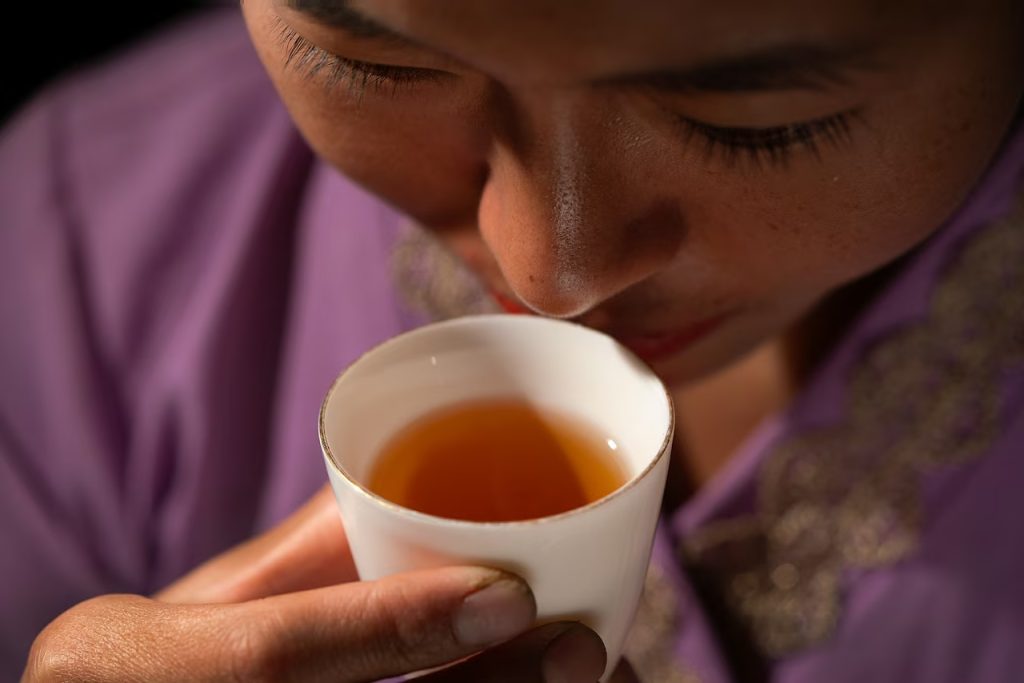

Beyond its chemical composition, tea’s warmth and aroma engage the senses in ways that further support mental clarity and relaxation. Studies suggest that the sensory experiences when drinking tea can help lower cortisol levels, reduce anxiety, and enhance mindfulness.
For example, a 2018 study found that inhaling black tea aroma reduced stress markers in participants performing cognitive tasks. Floral teas, like chamomile, are particularly effective for relaxation, while the refreshing scent of peppermint tea is linked to improved alertness.
Source – https://www.nationalgeographic.com/science/article/how-tea-affects-body